Every equipment owner wants the same thing: to sell their machine for as much as possible when it's time to upgrade.
Many assume resale value depends mainly on age. In reality, experienced buyers and dealers look much deeper. The machines that retain their value aren't necessarily the newest — they're the ones buyers trust the most.
1. Condition Is More Important Than Age
Two tractors built in the same year can have dramatically different resale values. Why? Because buyers aren't purchasing a date on the registration. They're purchasing confidence in the machine's future performance.
A well-maintained older tractor often commands a stronger price than a newer one showing signs of neglect. Condition creates confidence.
2. Service History Reduces Uncertainty
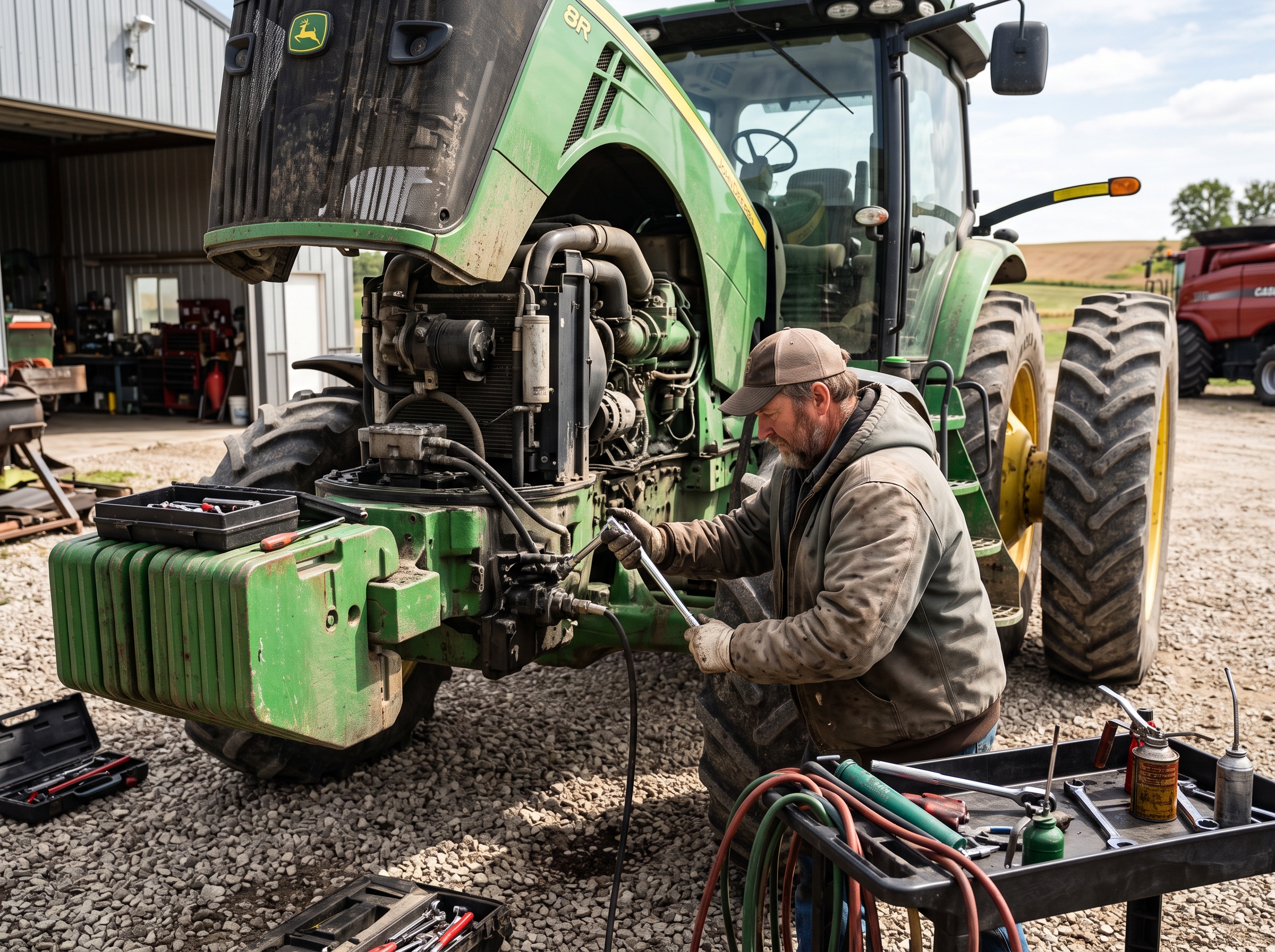
One of the easiest ways to increase resale value is by keeping complete maintenance records. Documentation shows the machine has been serviced on schedule, properly maintained, repaired when necessary, and cared for consistently.
When buyers don't know a machine's history, they assume more risk — and they usually offer less. Good records turn assumptions into facts.
3. Hours Matter — But Only With Context
Operating hours are important because they indicate how much the machine has worked. But hours alone don't determine value. A tractor with 8,000 carefully maintained hours may be a better purchase than one with 5,000 poorly maintained hours.
Buyers increasingly evaluate service quality, overall condition, previous workload, and evidence of proper care.
Hours tell part of the story. Maintenance tells the rest.
4. Major Components Carry the Most Weight
Experienced buyers pay close attention to expensive systems, including the engine, transmission, hydraulic system, PTO, front axle, and electronics.
Minor cosmetic flaws rarely reduce value as much as uncertainty around these major components. Mechanical confidence always outweighs cosmetic perfection.
5. Market Demand Influences Every Sale
Some models consistently retain value because buyers know them well. Strong resale values are often supported by proven reliability, good parts availability, local dealer support, and strong demand in the used market.
Even an excellent machine may sell for less if demand is limited. Resale value is determined by both condition and market demand.
6. Appearance Still Matters
While cosmetics don't replace mechanical condition, they do influence first impressions. Simple improvements before selling include thorough cleaning, removing dirt and grease, repairing broken lights, fixing minor cosmetic damage, and presenting a clean cab.
A clean machine suggests careful ownership. Neglect raises questions before the engine is even started.
7. Timing Can Increase Value
The time of year often affects resale prices. Equipment tends to attract stronger interest before busy working seasons, when buyers are preparing rather than reacting.
Good timing doesn't create value — but it can maximise it.
8. Resale Value Starts on the Day You Buy
Many owners think about resale only when they're ready to sell. Professionals think about it from the beginning. Every service completed. Every maintenance record kept. Every small repair done promptly. Every hour of careful operation.
Two tractors of the same age can end up with very different resale values:
| Tractor A | Tractor B | |
|---|---|---|
| Service history | Full | Missing |
| Condition | Clean | Oil leaks |
| Cosmetics | Original paint | Poor |
| Tyres | Well-maintained | Worn |
| Resale value | Higher | Lower |
Final Insight
Resale value isn't built in the final week before a sale. It's built over every year of ownership.
The machines that command the strongest prices aren't always the newest or the lowest-hour examples. They're the ones buyers trust to continue working reliably long after the deal is done.