Not all maintenance delivers the same return. Some jobs simply keep a machine clean. Others prevent failures that can cost tens — or even hundreds — of thousands of rand in repairs and downtime.
The best equipment managers don't try to do everything. They focus on the maintenance tasks that deliver the greatest return on every hour invested.
1. Engine Oil and Filter Changes
Few maintenance tasks offer a better return. Clean oil protects bearings, pistons, camshafts, and turbochargers from premature wear.
Delaying an oil change may save a small amount today, but it increases the risk of one of the most expensive repairs on the machine.
Oil is cheap. Engines are not.
2. Keep Air Filters Clean
An engine needs clean air as much as it needs clean fuel. A restricted air filter can reduce engine performance, increase fuel consumption, allow dust into the engine if damaged, and accelerate internal wear.
In dusty conditions, air filters should be inspected far more frequently than many owners realise. Always follow the manufacturer's service recommendations, especially for replacement rather than excessive cleaning where applicable.
3. Grease Moving Components Regularly
Grease is one of the least expensive consumables on the farm. It's also one of the most valuable. Regular lubrication reduces wear on pins, bushings, universal joints, steering components, loader pivots, and bearings.
Skipping a few minutes of greasing can eventually lead to repairs costing thousands.
4. Monitor Fluids Before Problems Develop
Checking fluid levels takes minutes. Ignoring them can stop a machine for days. Regularly inspect engine oil, coolant, hydraulic oil, transmission oil, and brake fluid where applicable.
More importantly, investigate why a level has dropped. Fluids don't disappear without a reason.
5. Maintain the Cooling System
Many major engine failures begin with overheating. Preventative checks include cleaning radiators, inspecting coolant hoses, checking coolant concentration, monitoring water pumps, and ensuring cooling fins remain free of debris.
A clean cooling system protects one of the most valuable components on the machine.
6. Look After Tyres
Tyres influence far more than traction. Incorrect pressures can increase fuel consumption, reduce tyre life, increase soil compaction, and reduce pulling efficiency.
Regular pressure checks and visual inspections often pay for themselves many times over.
7. Fix Small Leaks Immediately
A few drops of oil beneath a tractor are easy to ignore. They shouldn't be. Small leaks can indicate worn seals, damaged hoses, loose fittings, or developing hydraulic failures.
Repairing a leak early is usually far cheaper than replacing the damaged components that follow.
8. Inspect Before Every Busy Season
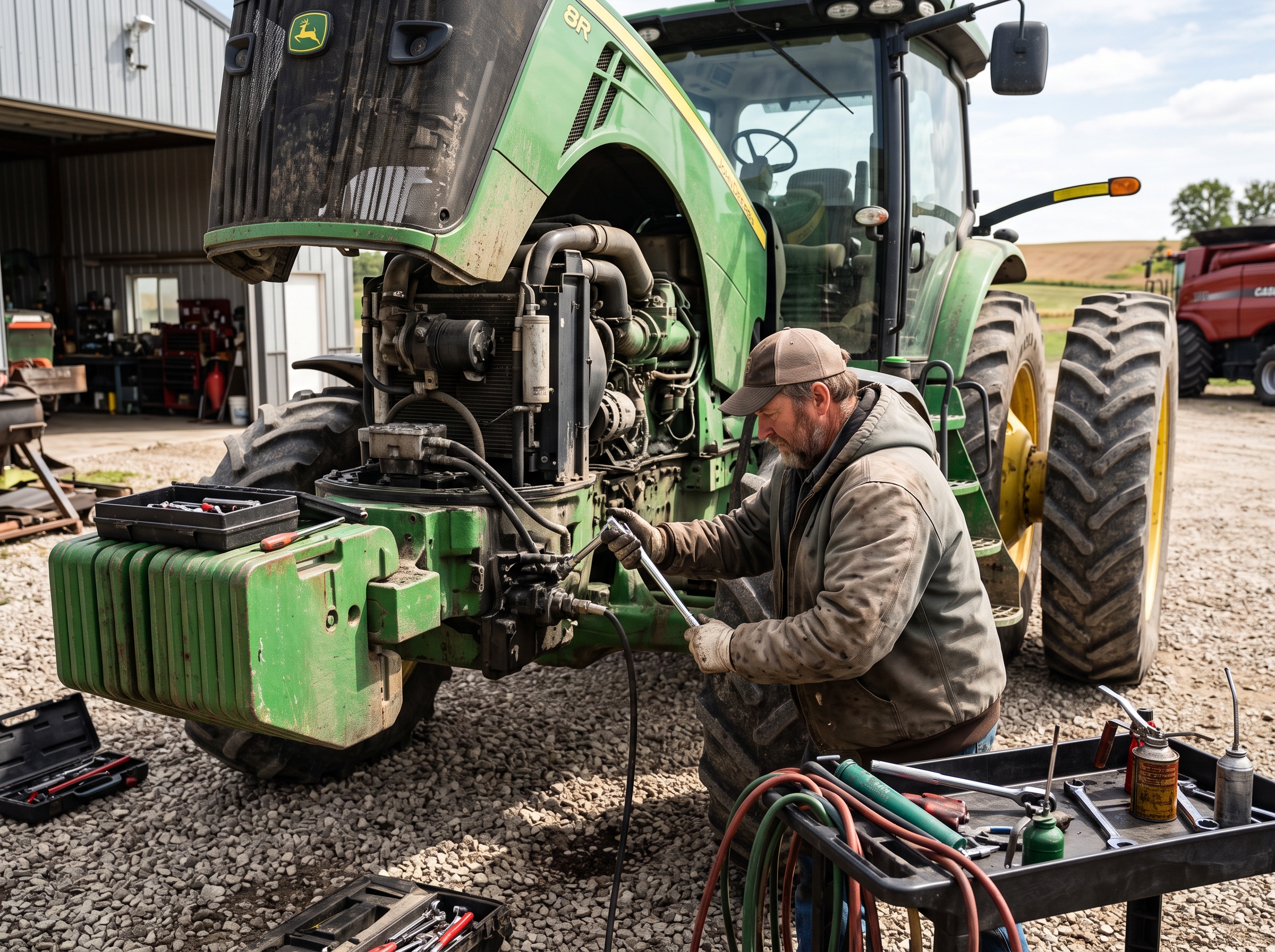
The best maintenance happens before the machine is urgently needed. Before planting or harvest, inspect belts, bearings, batteries, hydraulic hoses, lights, PTO systems, brakes, and electrical connections.
Finding problems in the workshop is always preferable to finding them in the field.
Final Insight
The maintenance jobs that save the most money are rarely the most expensive. They're the simple, consistent tasks that prevent major failures from ever happening.
Successful operators don't wait until something breaks. They invest a little time today to avoid losing far more time — and money — tomorrow.