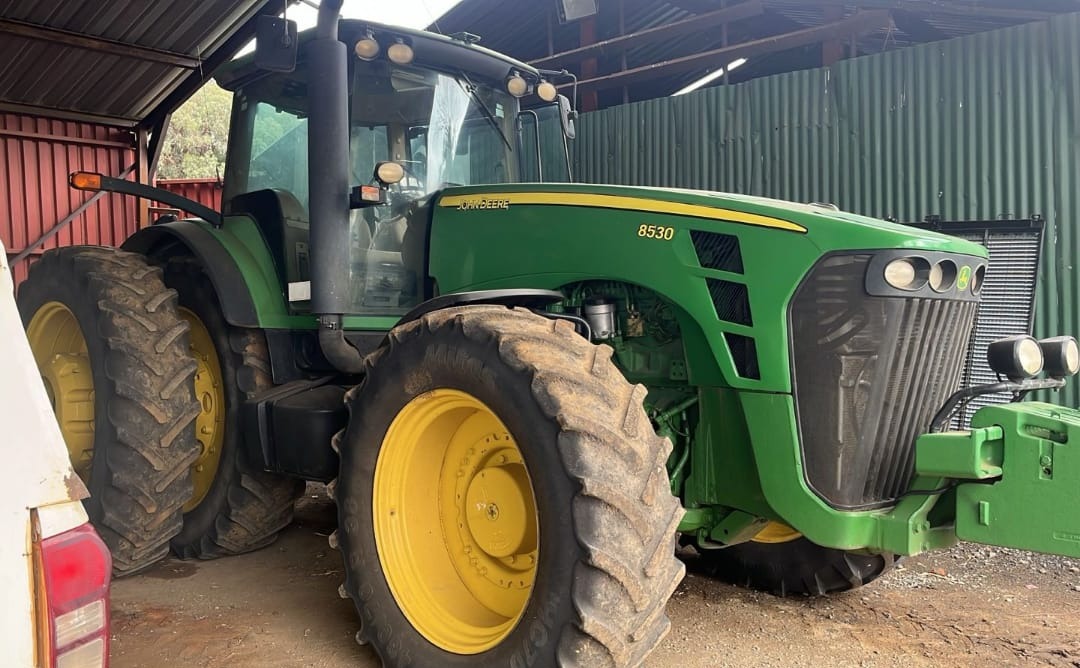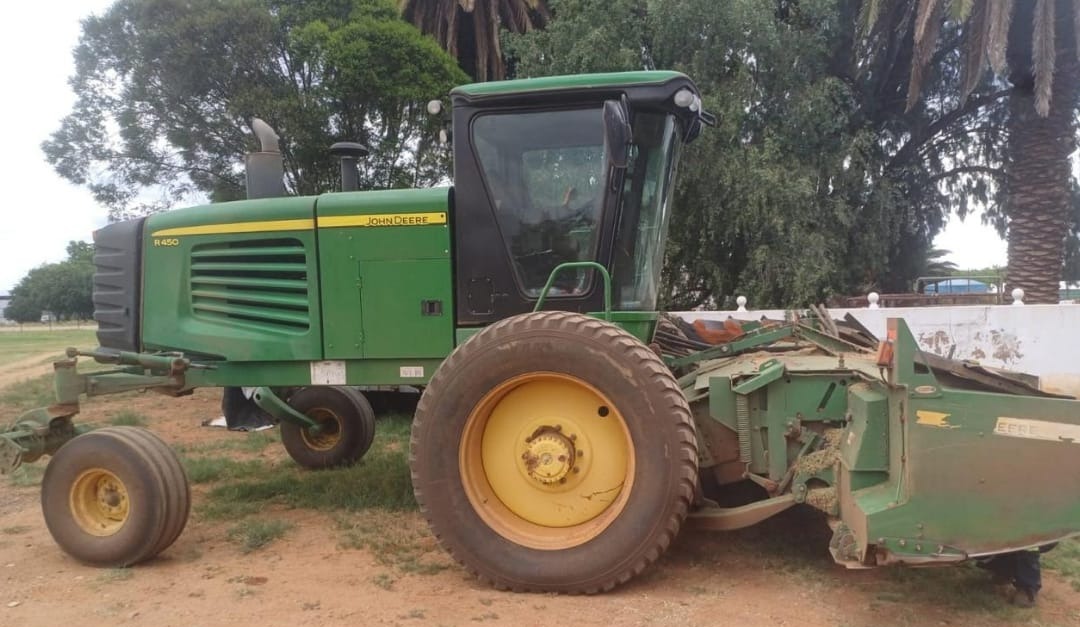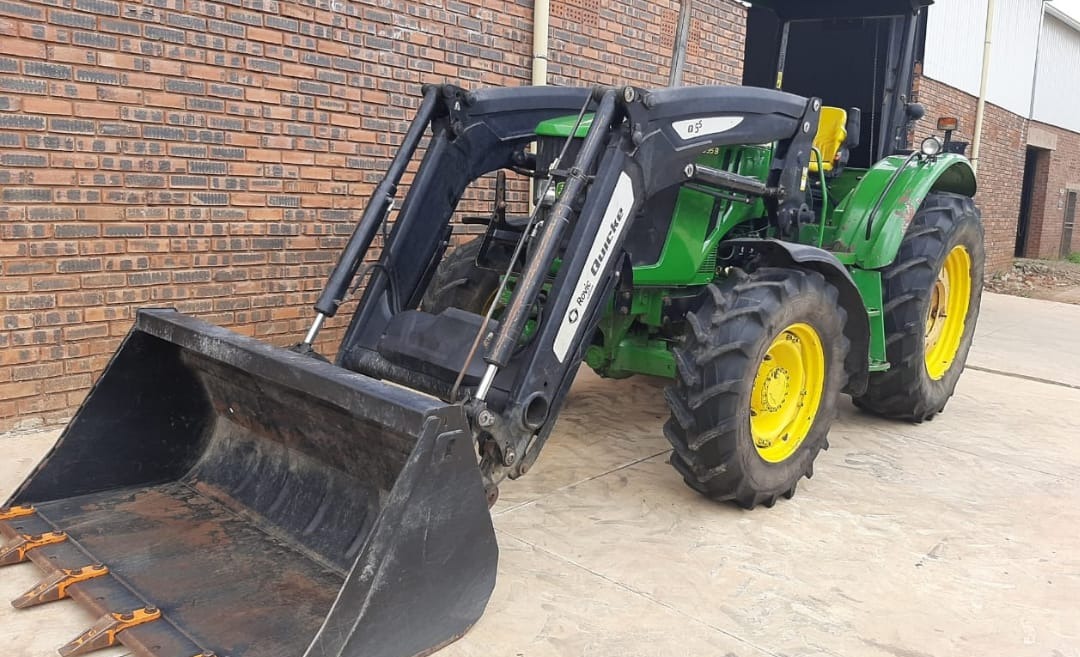
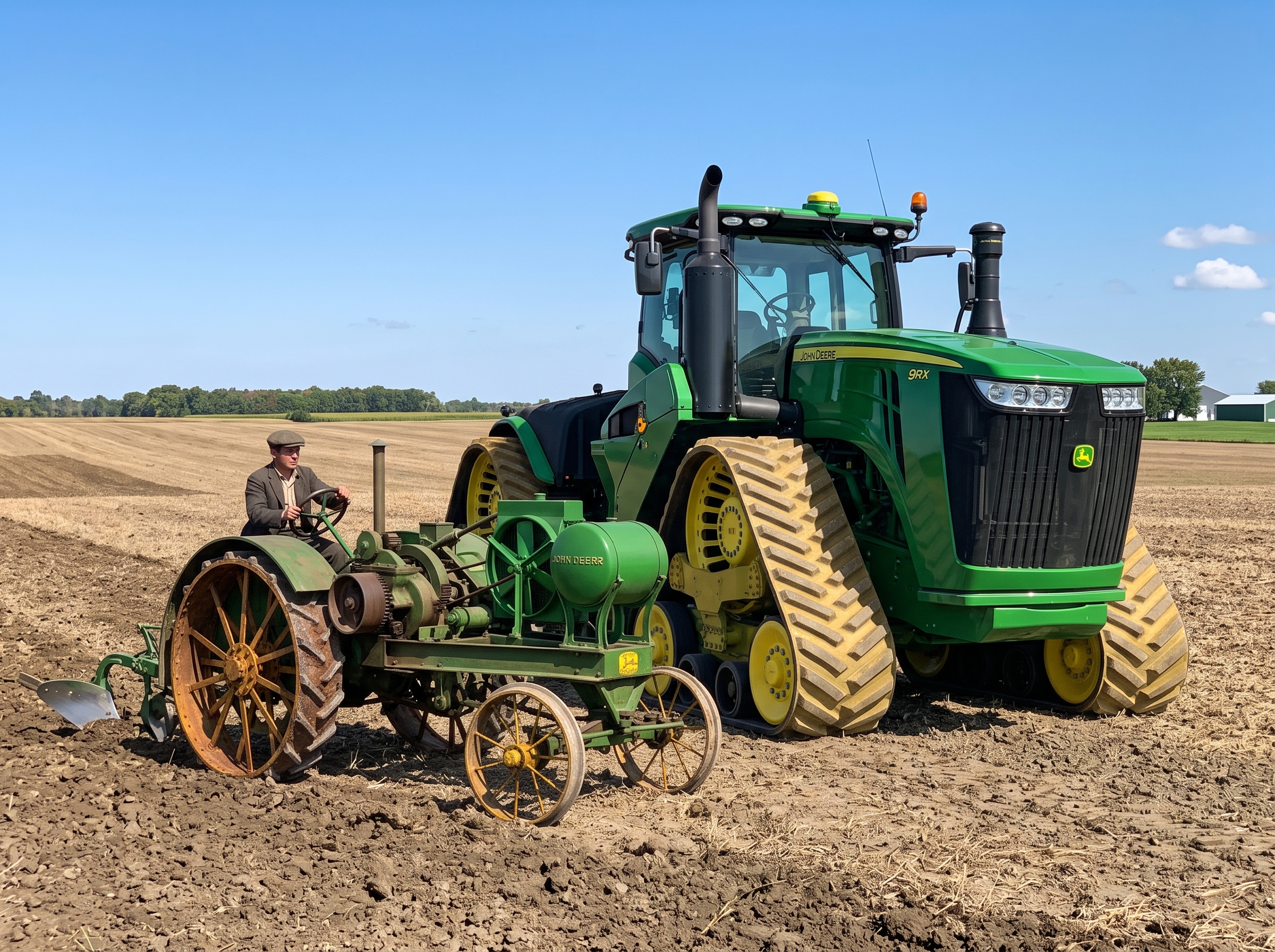
Every used John Deere listing on this site — every green-and-yellow tractor sitting in a farmyard from the Western Cape to the Free State — carries a piece of a story that started with one bankrupt blacksmith and a broken saw blade. Almost 190 years later, that company reports revenue in the tens of billions of dollars and employs over 70,000 people worldwide. Here's how it actually happened — including the parts most company histories leave out.
1836–1837: The Blacksmith With $73 Left
John Deere was not a success story waiting to happen. He was a 32-year-old blacksmith from Vermont who had gone through a string of failed shops and was, by most accounts, close to bankrupt. In 1836 he left his wife and children behind — they would follow once he'd established himself — and headed west to Grand Detour, Illinois, a small settlement on a bend of the Rock River, with reportedly $73 to his name.
Grand Detour needed a blacksmith, and Deere set up shop. It didn't take him long to hear the complaint every farmer in the region had: the cast-iron plows they'd brought from the East Coast were useless in Midwestern prairie soil. The thick, sticky black earth clung to the plow's moldboard, forcing farmers to stop every few strides to scrape it clean by hand.
The problem wasn't the farmers, and it wasn't the land. It was that nobody had built a plow for this particular soil yet.
The story that's been told for nearly two centuries is that Deere spotted a broken steel saw blade at a local sawmill, realized its smooth, hard surface might shed soil the way cast iron never could, and took it home to shape into a plow. By 1837 he had built what's remembered as the first commercially successful self-scouring steel plow — a moldboard polished smooth enough that prairie soil slid off it instead of sticking.
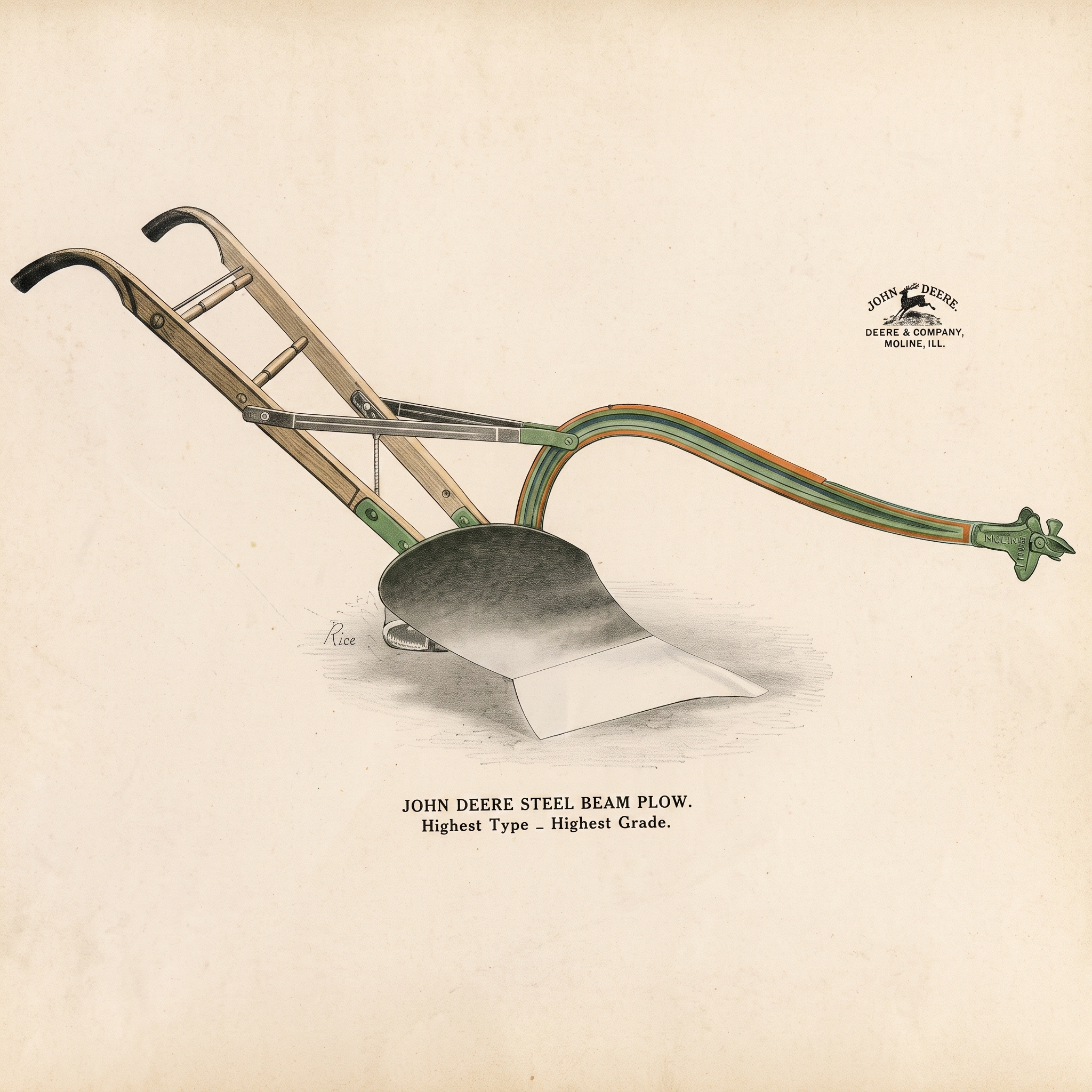
The full story is more complicated than the plaque outside Deere's Grand Detour workshop suggests — and that's what makes it more interesting, not less. A Lockport, Illinois blacksmith named John Lane had already built a steel moldboard plow in 1833, four years before Deere, by cutting strips from an old saw blade. Lane never patented it and made an estimated 500 or fewer. Deere's genuine breakthrough wasn't being first with steel — it was building a better, repeatable, commercially scaled version of the idea, and then organizing a business around it that Lane never did. History rewarded the second inventor who could actually manufacture and sell the thing.
1848: Betting Everything on a River Town
By 1846, Deere's plows were selling at a rate of roughly a thousand a year — remarkable for a business built around one product in a settlement with no railroad. But Grand Detour had a fatal flaw: it was landlocked, far from reliable transport, and the price of shipping in raw steel from Pittsburgh or England ate into every plow's margin.
In 1848, Deere made the first of several bet-the-company decisions that would define this business over the next 190 years. He left his business partner and moved the entire operation 120 kilometres south to Moline, Illinois — a town sitting directly on the Mississippi River, with barge access to coal, iron, and steel, and a route to sell finished plows far beyond the prairie. It was a costly, disruptive move for an already-profitable business. It was also exactly right: Moline remains Deere & Company's headquarters city to this day.
1857: The Panic That Nearly Ended It
Nine years after the move to Moline, the Panic of 1857 hit. Overbuilt railroads and overextended bank credit triggered a national financial crash; commodity prices collapsed, and farmers — Deere's entire customer base — stopped paying. They couldn't; many had no cash at all. Deere's company had already paid for the steel in machines sitting unsold or unpaid-for in the field, and the business came within a hair of personal and corporate bankruptcy.
The rescue came from inside the family. On July 1, 1857, the company was reorganized into a partnership, and John Deere's son Charles — then 21 years old — took over daily management while his father kept the presidency. It worked. Charles Deere would go on to run the company for the next fifty years, and it was Charles, not John, who built the systematic dealer network, expanded the product line beyond plows, and pushed the company to incorporate formally as Deere & Company in 1868.
The man whose name is on every tractor built the plow. His son built the company.
John Deere served as president until his death in 1886. By then the business he'd started with a $73 stake and a scrap of steel was the leading implement manufacturer in the country that wasn't named International Harvester.
1878: How a Shipwreck Brought John Deere to South Africa
Forty years before John Deere had any formal presence on the continent, the company's equipment reached South Africa by accident.
In 1878, a ship ran aground off Bathurst, in the Eastern Cape, carrying general cargo that included two John Deere "Prairie Queen" walking plows. What survived the wreck was salvaged and sold at public auction — and among the buyers was George Knott, a farmer at Botha's Post, Victoria East. Knott put the two plows to work, and they're recorded as the first John Deere implements to turn South African soil.
It would be another four decades before John Deere had anything resembling a real South African operation. The company's first formal foothold came in the 1920s, through Johannesburg importer Dunell, Ebden & Co. — which John Deere itself partly bought into in 1930 after the importer nearly went under. P. Andrag & Sons of Cape Town became the official franchise holder in 1939, and it's their network that grew into the dealer presence South African farmers would recognize today.
So the first John Deere furrow on this continent wasn't cut by a company strategy or an import deal. It was cut by a farmer who bought shipwreck salvage at auction, decades before Deere & Company had any idea South Africa existed as a market.
1918: The Overnight Tractor Company
For its first 80 years, Deere & Company didn't make a single tractor. It built plows, then a broader line of horse-drawn implements — but the internal combustion engine was reshaping farming, and Deere had no foothold in it. Rather than spend years developing tractor technology from scratch, the company's board made a decision on March 14, 1918 that still gets debated by historians: they bought their way in, paying a reported $2.1 million (accounts differ slightly, ranging up to $2.35 million) for the Waterloo Gasoline Engine Company — makers of the Waterloo Boy tractor, one of the first gasoline tractors sold at commercial scale.
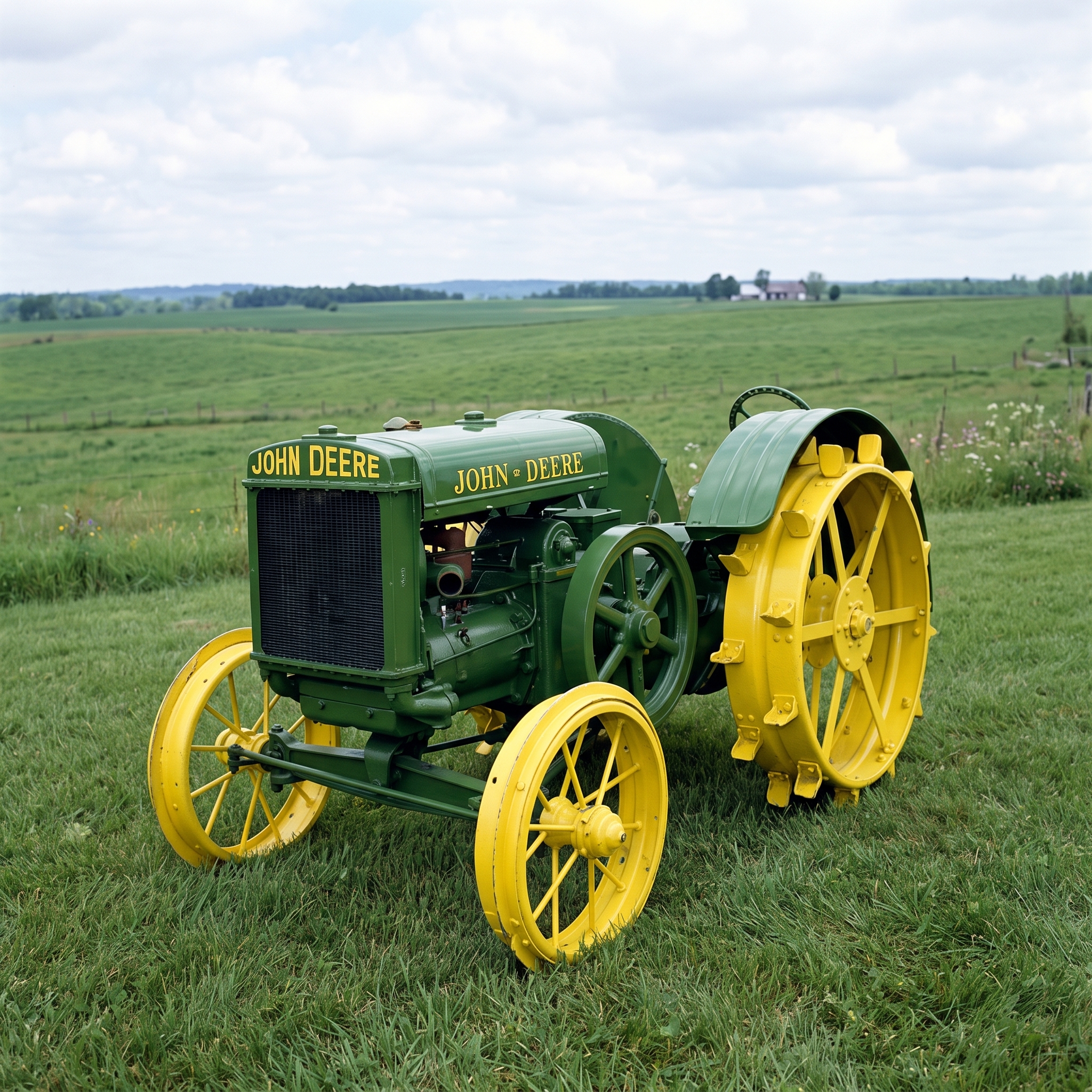
Deere kept selling tractors under the Waterloo Boy name until 1923, when the John Deere Model D — the company's first tractor to actually carry the Deere name — arrived. That $2.1 million purchase, adjusted for a century of inflation, would be worth in the region of $35 million in today's money. It's arguably the best-timed acquisition in the company's history: within a few decades, tractors would become the core of the entire business.
The Great Depression: A Choice That Built a Century of Loyalty
By 1929, the John Deere name meant something to farmers, but the Great Depression tested what that meant in practice. Between 1929 and 1933, roughly a third of American farmers lost their farms outright. Deere's own equipment was sitting unpaid-for in barns across the Midwest — the exact scenario that had nearly bankrupted the company in 1857.
This time, under company president Charles Deere Wiman — John Deere's great-grandson — the decision went the other way. Deere told its dealers to stop collecting from struggling customers. It extended credit terms rather than calling in loans. It made a deliberate choice not to repossess machinery from farm families who couldn't pay, even though the company itself lost significant revenue doing it.
That decision is still paying dividends, literally. Decades later, in the 1970s and 80s, Deere salespeople were routinely told by customers that the company had "carried" their grandparents through the Depression — and that's the reason three generations of the same family had bought nothing but green and yellow ever since.
World War II: Tanks, Battalions, and a Failed Tractor-Turned-Tank
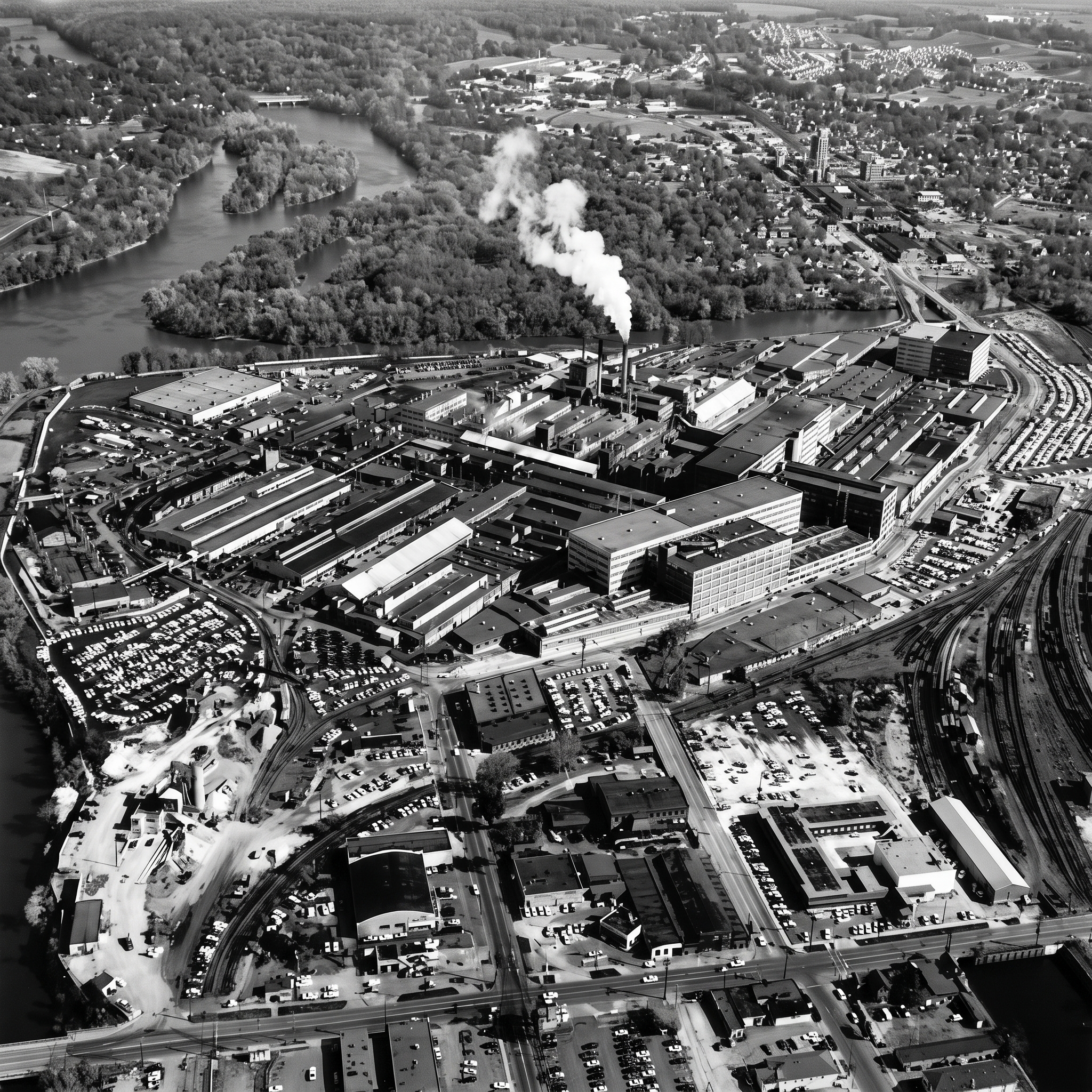
When the United States entered the Second World War, Deere's Waterloo, Iowa plant converted rapidly to military production. Between 1941 and 1943 alone, the facility fulfilled more than 1,000 separate government contracts — producing ammunition casings, aircraft components for Grumman, Curtiss and Douglas warplanes, mobile field laundry units, and two-wheeled supply trailers towed behind tanks. Deere was the sole manufacturer of the M-8 armored trailer, and the company also produced transmissions for Sherman tanks.
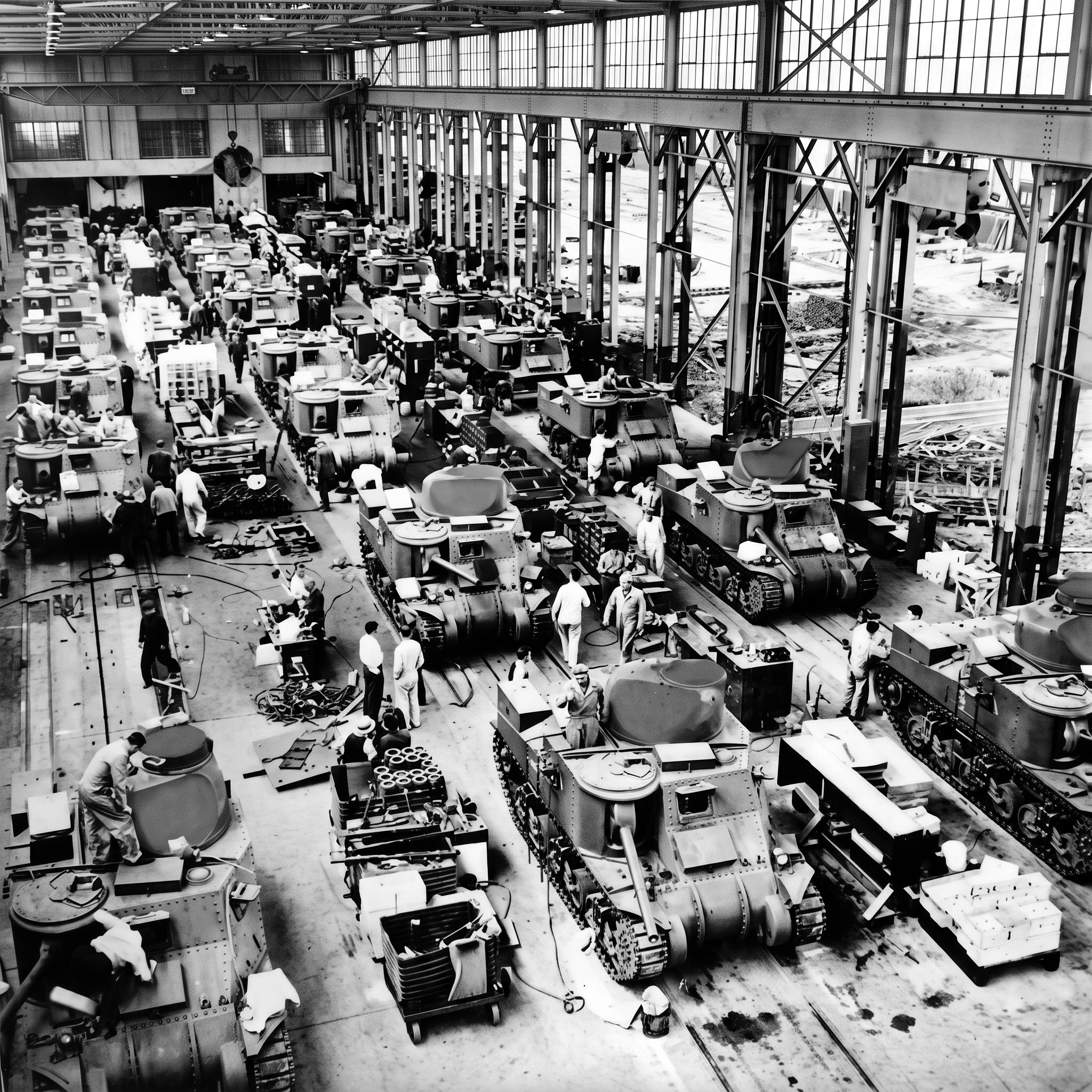
One project never made it past the prototype stage, and it's one of the stranger footnotes in the company's history: engineers secretly bolted heavy armor plating and a machine-gun turret onto a standard John Deere Model A tractor, building two prototype "tractor tanks" at the Waterloo plant. They were shipped to the Aberdeen Proving Ground in Maryland for Army testing in early 1941. The verdict was blunt — underpowered, slow, and dangerously top-heavy — and the idea was quietly shelved.
Company president Charles Deere Wiman accepted an Army colonel's commission during the war. Around 4,500 Deere employees served in the military, enough that a dedicated ordnance unit — informally known as the "John Deere Battalion" — saw action in the European theater.
1958–1963: Taking the Crown
By 1958, Deere & Company had overtaken its longtime American rival, International Harvester, to become the largest farm equipment manufacturer in the United States. Five years later, in 1963, it took the title worldwide, becoming the largest agricultural machinery manufacturer on the planet — a position it has never fully relinquished since, even as competitors like CNH Industrial (Case IH/New Holland) and AGCO have grown into major global players of their own.
1966: The First Billion-Dollar Year
Deere & Company's annual sales crossed $1 billion for the first time in 1966 — 129 years after John Deere first heated a broken saw blade over a fire in Grand Detour. It was a milestone that, at the time, put the company in genuinely rarefied corporate company.
1986–1987: The 163-Day Strike
Not every chapter in Deere's history is triumphant. In August 1986, roughly 12,000 UAW-represented workers walked off the job after Deere's management refused to match a pattern labor agreement recently negotiated at Caterpillar. What followed was the longest strike in the company's history — 163 days, stretching from August 24, 1986 to a tentative settlement on January 27, 1987.
The strike cost Deere a $229.3 million loss for the year — the company's first annual loss since the depths of the Great Depression in 1933. The board cut shareholder dividends in half.
Workers ultimately ratified the new contract with 84% approval, winning strike-settlement bonuses, cost-of-living adjustments, improved pension terms, and Martin Luther King Jr. Day as a paid holiday. It remains, to date, the last major strike against Deere — until a smaller-scale walkout briefly returned headlines in the early 2020s.
Going Public: A Company Owned by the Farm, Then by Wall Street
Deere & Company first incorporated with shareholders in 1868, but for most of the 19th and 20th centuries it operated much like a closely-held family business, with the Deere and Wiman families retaining significant control. The company's shares became broadly, publicly traded on the New York Stock Exchange under the ticker DE by 1978 — the point at which Deere transformed, in practice, from a family-steered manufacturer into the shareholder-owned corporation it is today.
Precision Agriculture and the Driverless Tractor
The 21st century brought a different kind of transformation. Deere began investing heavily in GPS-guided steering, yield-mapping, and data-driven "precision agriculture" tools through the 2000s and 2010s — technology that let a single operator plant, spray, or harvest with centimeter-level accuracy across thousands of hectares.
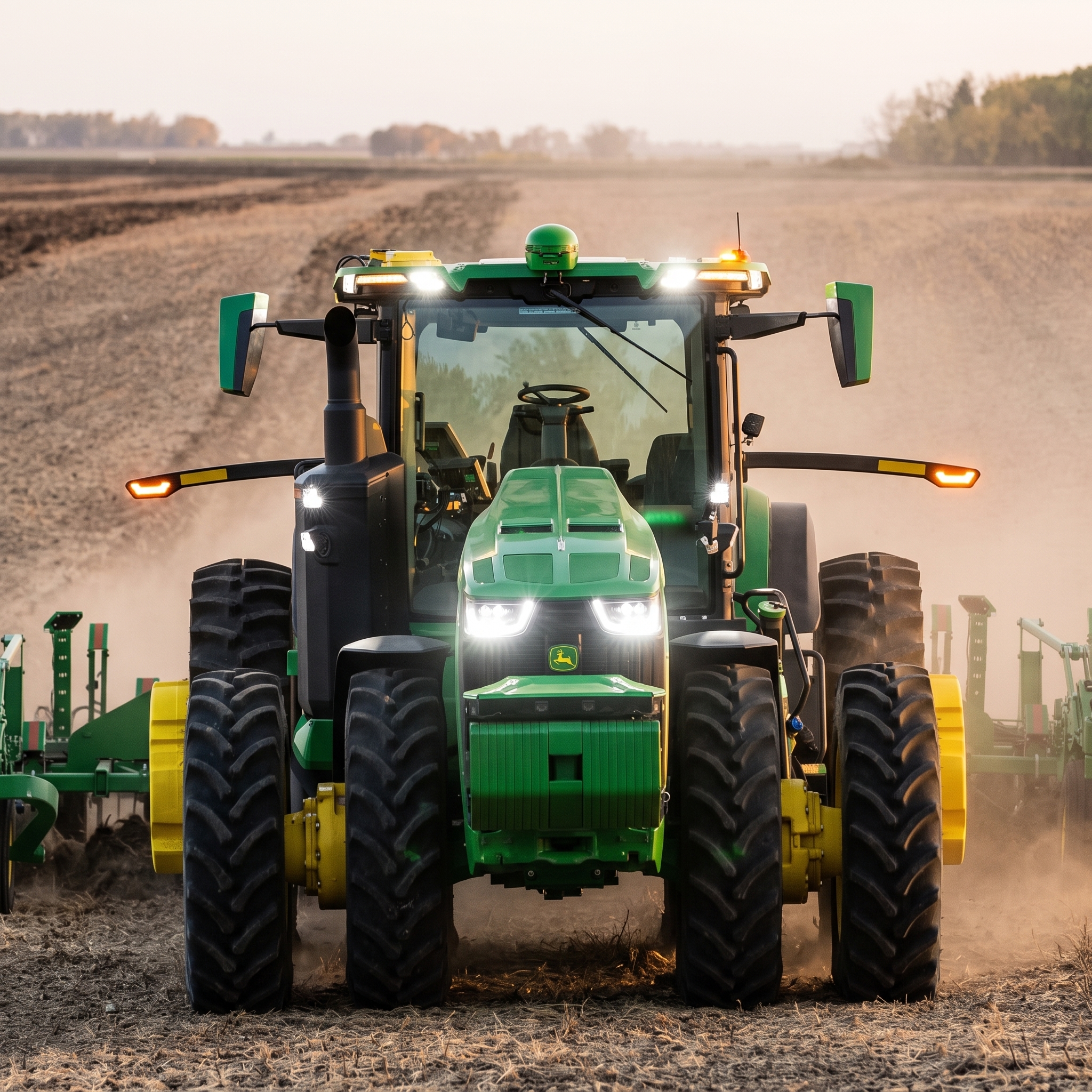
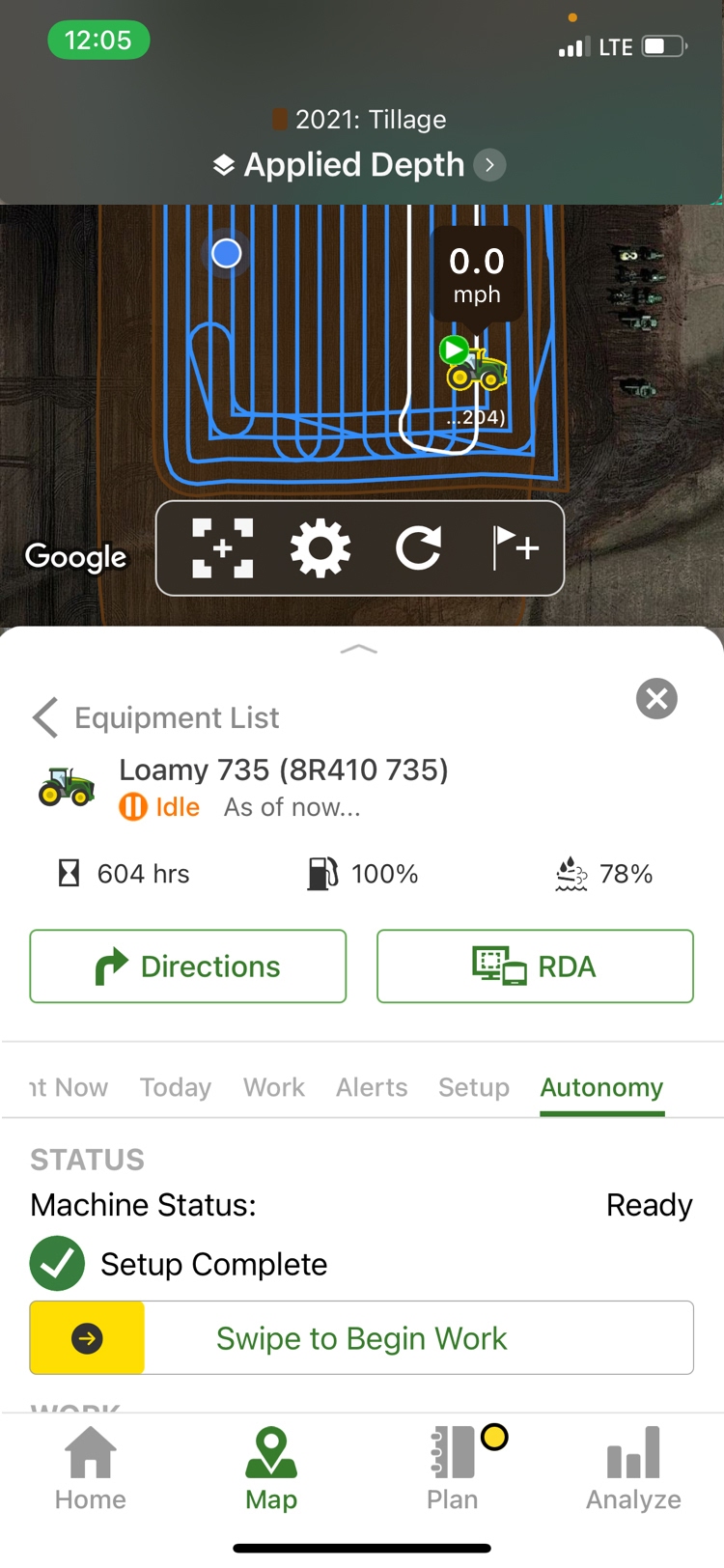
That investment culminated at CES 2022 in Las Vegas, where Deere unveiled a fully autonomous version of its 8R tractor, paired with a TruSet-enabled chisel plow. The machine uses six pairs of stereo cameras for 360-degree obstacle detection, running captured images through a neural network that classifies every pixel in roughly 100 milliseconds to decide whether to stop or continue. A farmer can start the job from a smartphone app and walk away. Deere's own reasoning: with global population projected to approach 10 billion by 2050 and food demand rising roughly 50% along with it, autonomy isn't a novelty — it's positioned as a necessary answer to a shrinking, aging agricultural workforce.
Right to Repair: The Fight That's Still Being Settled
Deere's push into software and proprietary diagnostics didn't come without a cost to its relationship with farmers. As modern tractors and combines evolved into networks of electronic control units, many repairs that once took a wrench and twenty minutes started requiring dealer-only diagnostic software — locking farmers and independent mechanics out of machines they owned outright.
The backlash built for years, culminating in a January 2025 lawsuit from the U.S. Federal Trade Commission, joined by Arizona, Illinois, Michigan, Minnesota and Wisconsin, accusing Deere of illegally monopolizing the repair market for its own equipment. In 2026, Deere agreed to a landmark settlement: a $99 million payment into a class fund for affected customers, and a 10-year commitment to give farmers and independent repair shops the same diagnostic tools, fault-code access, and repair software already available to authorized dealers.
It's a genuinely rare thing in corporate history: a company built its reputation for a century on standing by farmers through the Depression, then spent the 2010s locking those same farmers out of their own machines' software — and is only now, under legal pressure, being forced to reverse course.
What "Big" Actually Means: John Deere's Size Through Time
Numbers make the story concrete. Here's Deere & Company's documented growth, from a one-man forge to a global industrial company — figures drawn from company financial disclosures, SEC filings, and market data.
| Year | Milestone | Approx. Revenue | Employees | Notes |
|---|---|---|---|---|
| 1837 | Founding | — | 1 (John Deere) | Grand Detour blacksmith shop |
| 1846 | Early growth | — | Small workshop | ~1,000 plows sold that year |
| 1868 | Incorporation | — | — | Formally becomes Deere & Company |
| 1878 | First SA implements | — | — | Shipwrecked plows reach the Eastern Cape |
| 1918 | Waterloo Boy acquisition | — | — | $2.1M purchase (~$35M in today's dollars) |
| 1933 | Great Depression trough | Loss-making year | — | Company chose not to foreclose on farmers |
| 1963 | Global #1 | — | — | Becomes world's largest farm/tractor manufacturer |
| 1966 | First $1B year | ~$1.0B | — | 129 years after founding |
| 1986 | Strike year | Net loss | ~37,000 (approx., industry estimate) | $229.3M loss — first loss since 1933 |
| 2000 | Turn of the century | — | 43,700 | |
| 2005 | $21.2B | — | ||
| 2010 | $26.0B | — | Post-financial-crisis recovery | |
| 2018 | $37.4B | — | ||
| 2023 | All-time peak revenue | $61.25B | ~75,800 | +16.5% year-on-year, commodity boom |
| 2024 | $51.72B | ~75,847 | ||
| 2025 | Most recent full fiscal year | $45.68B | 73,100 | Net income $5.03B |
| 2026 (mid-year) | — | — | Market cap in the $130–170B range through late 2025/2026, fluctuating with results and commodity cycles |
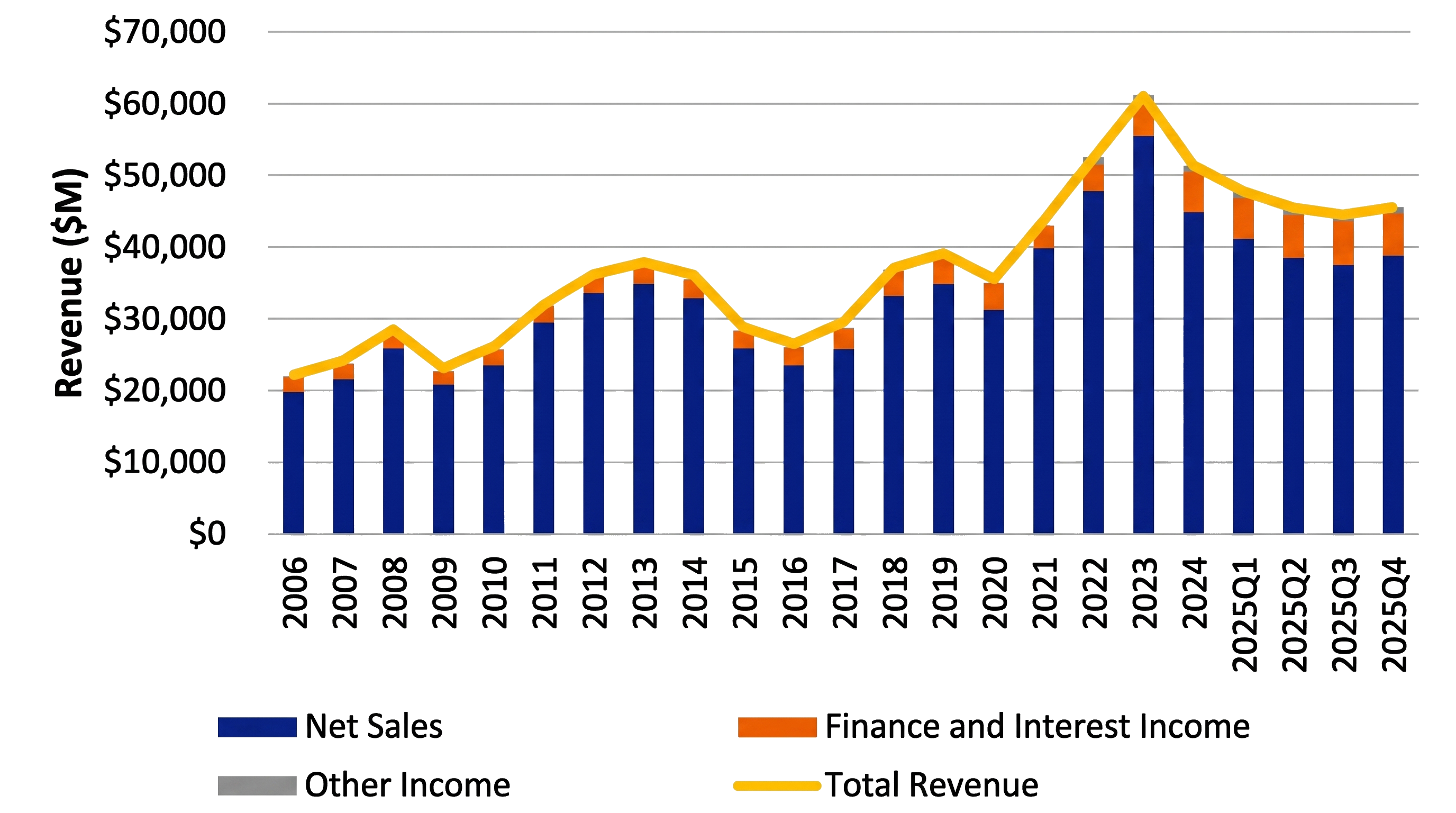
Deere's revenue nearly tripled between 2005 ($21.2B) and its 2023 peak ($61.25B) — but the swings are steep, not steady. Revenue fell more than 25% from that 2023 peak to 2025, tracking the broader agricultural commodity cycle. Farm equipment demand rises and falls hard with crop prices — a pattern true for every manufacturer in this industry, not just Deere.
The Logo: A Deer That Was Never Quite American
One detail even lifelong Deere owners often don't know: the leaping deer trademark, first used in 1873 and formally registered in 1876, wasn't modeled on the North American white-tailed deer most farmers would have recognized in their own fields. Early versions of the logo more closely resembled deer species found in Africa or Europe — an odd artistic choice for a company built entirely around the American Midwest. The mark has been redrawn several times since: refined in 1912 with the added slogan "The Trade Mark of Quality Made Famous by Good Implements," simplified to a solid silhouette in 1936 so it could be stenciled directly onto machine paint, and modernized again in 2000 into the version on every current Deere machine.
From a Broken Saw Blade to Every Farmyard
John Deere's own working life covered just one invention and one company. What's followed since — a business that survived two financial panics, a world war, a five-and-a-half-month strike, and is now navigating a farmer-trust crisis of its own making — has very little in common with the one-man forge in Grand Detour, except the name and, in theory, the same core promise: build something a farmer can actually rely on.
That promise is the reason a 40-year-old John Deere tractor still has real resale value today, and it's the same reason machines built under that green-and-yellow badge move through marketplaces like this one, generation after generation, long after the original buyer has sold the farm.