
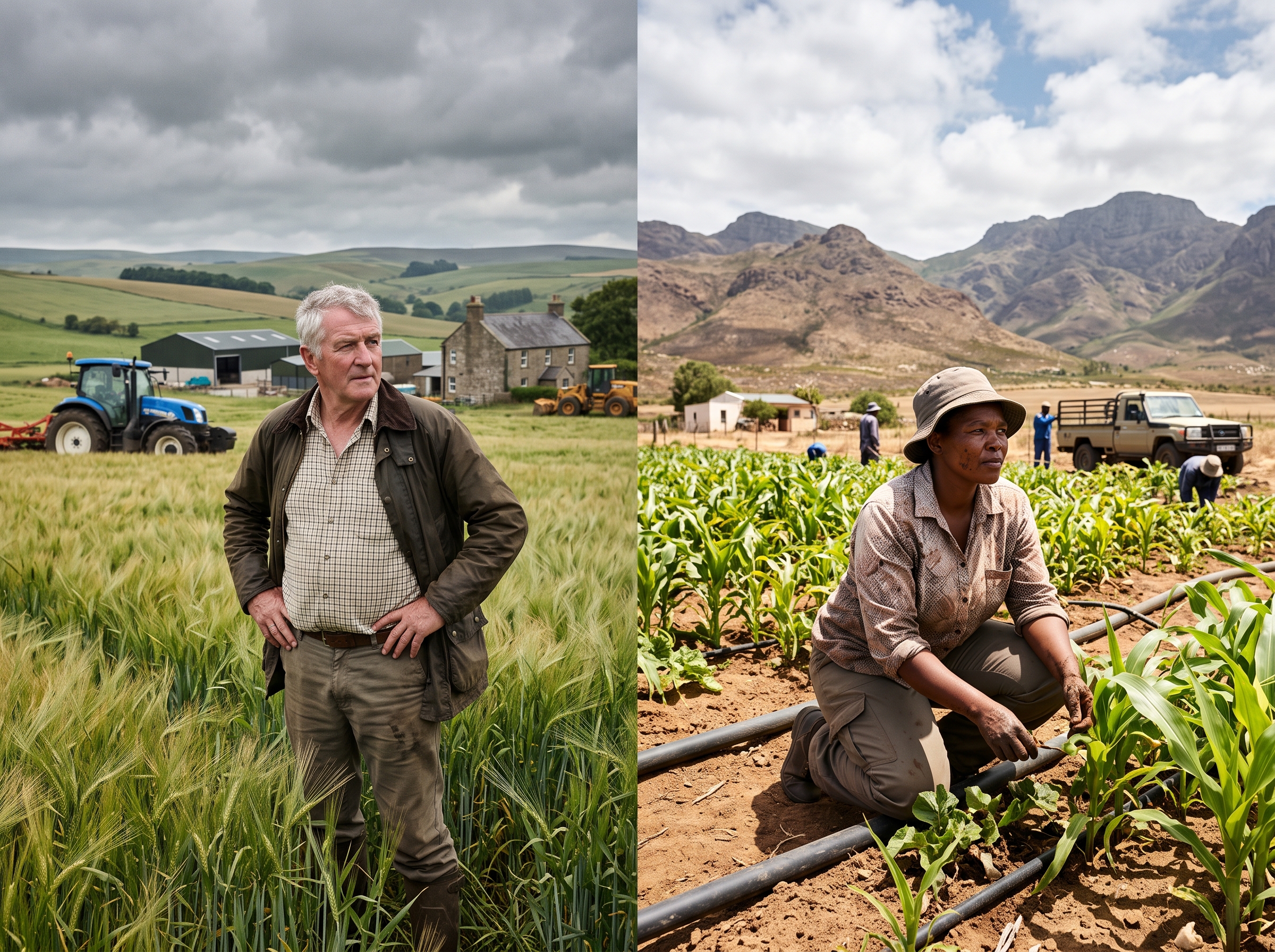
Farming looks different in every region of the world — different climates, different crops, different regulations. But one pattern shows up again and again: access to credit, and the conditions attached to it, increasingly shapes what's possible on the farm, alongside weather and soil.
Across regions, one reality is broadly consistent: farmers are generally expected to produce more while managing rising input costs, tighter margins, and often more conditional access to finance than in the past.
The regional notes below are general patterns commonly reported by operators and industry commentary in each region — not verified statistics for any specific year. If you're working from your own data or a specific report, treat these as a starting framework to adapt, not a substitute.
Southern Africa: Volatility and Constrained Credit
Farmers in Southern Africa commonly navigate irregular rainfall and recurring drought risk, high fuel and transport costs over long supply chains, currency volatility that feeds directly into input prices, and the cost and availability of imported machinery and spare parts.
Formal lending in the region tends to be conservative, often weighted toward collateral rather than production potential — which can limit expansion even for operationally sound farms. Many operations lean on a mix of seasonal overdrafts, supplier-linked input finance, and equipment loans with strict repayment schedules.
When credit buffers are already stretched, equipment failure during planting or harvest stops being just a logistical setback — it can become a liquidity problem.
Europe: High Standards, Structured Financing
European agriculture generally operates within a highly regulated environment — labour and compliance costs, environmental and emissions requirements, energy prices, and administrative reporting all factor into the cost of running a farm.
Access to finance is generally strong, supported by established banking and cooperative structures. Increasingly, though, sustainability and compliance expectations factor into how lenders and subsidy programmes assess risk — meaning capital is often available, but shaped by regulatory direction as much as by farm economics.
United States: Scale and Sensitivity to Financial Cycles
Large-scale U.S. agriculture is deeply integrated into formal credit markets, with many operations carrying meaningful leverage across land, equipment, and operating loans — often spread across several lenders.
Common pressures include the cost of servicing debt, high capital requirements for modern machinery fleets, persistent input cost inflation, and commodity price volatility. Because of this integration with credit markets, farm finances tend to be more sensitive to interest-rate and lending-condition cycles than in less credit-dependent systems — during tighter cycles, credit lines can become less flexible and collateral requirements can rise.
In a highly leveraged system, equipment downtime isn't only an operational issue — it can ripple into loan covenants and refinancing capacity.
South America: Strong Production, High Volatility
Brazil and Argentina remain major global agricultural production hubs, but operate with historically volatile financial conditions — exchange-rate swings, inflation, shifting export and trade policy, and infrastructure bottlenecks to port.
Financing structures in the region are often shorter-term and more exposed to macroeconomic shifts than in more stable credit markets, frequently relying on supplier-linked credit and pre-harvest financing tied to commodity contracts. Currency volatility in particular can erode margins quickly, even in a strong yield year.
Asia: Fragmented Credit, Rising Mechanisation Pressure
Across much of Asia, agriculture is characterised by smaller landholdings and fragmented production, with uneven access to formal financial services in many areas.
Where traditional bank credit is limited, financing commonly comes through cooperatives, microfinance institutions, input suppliers offering deferred payment terms, or informal lending networks. These sources provide access to capital, but often at higher effective cost and with less flexibility during a poor season — which means mechanisation decisions are frequently constrained by financing availability as much as by agronomic need.
The Pattern Every Region Shares
Despite these regional differences, a few structural pressures show up almost everywhere in modern agriculture: rising machinery and replacement costs, fuel and logistics expenses, input pricing pressure, weather variability, and generally tighter, more conditional lending criteria than farms may have relied on in the past.
The practical result, in broad terms, is a gap between the level of investment farms need to stay productive and competitive, and the level of risk financial systems are willing to carry in the short term.
Why Equipment Decisions Are Increasingly Financial Decisions
Agricultural machinery isn't purely an operational asset anymore — for many operations, it's tied directly into financial planning, credit exposure, and liquidity management.
Worth weighing when it comes to equipment:
- Whether financing terms actually align with your seasonal cash flow
- How downtime could affect loan obligations or delivery commitments
- The resale value of machinery in a tighter-credit environment
- Maintenance costs relative to borrowing capacity
- Your ability to replace critical equipment if credit conditions tighten
For many farms, equipment reliability and financial stability are more connected than they first appear — a breakdown during a peak operational window can have consequences well beyond the repair bill when credit buffers are limited.
| Region | Commonly Cited Challenge | Typical Focus |
|---|---|---|
| Southern Africa | Weather & infrastructure | Reliability |
| Europe | Regulation & compliance | Efficiency |
| United States | Scale & input costs | Productivity |
| South America | Currency & logistics | Cost control |
| Asia | Land access & labour | Output per hectare |
Final Insight
Farmers around the world operate in very different climates, production systems, and regulatory environments — but the financial structure surrounding agriculture has grown more similar over time. Credit tends to be more conditional and more closely tied to risk assessment than it once was.
The challenge isn't only producing more with less. It's also maintaining stable access to the financial systems that make production possible in the first place.
While the specifics differ by region, one thing tends to hold across Southern Africa, Europe, the United States, South America, and Asia alike: farms that stay viable are usually the ones managing not just agronomy and machinery, but the relationship between production and credit.